My Guide to Releasing Yourself From the Bonds of Social Media
Social media is rotting our brains and making our bodies sick. It challenges teenagers to do stupid things and it plummets our self esteems, especially the self esteems of girls.
Subway surfing deaths have increased in places like New York City, where teenagers join in on the trend for the clicks. Wannabe influencers ruin the lives of those around them – even so far as to falsely accuse them of being a pedophile – to increase their views.
Social media companies have even been found guilty of intentionally designing themselves to be as addictive as possible. This has been proven in courts over and over again.
Below are some suggestions on steps you can take to dial back your use. These ideas aren’t meant to be implemented linearly and they aren’t all-or-nothing; my hope is you’ll consider applying what you can so you can tone back the addiction a little bit.
-
Conduct a Time Audit
It’s helpful to know just how much meth you’re actually consuming. The easiest way to do this is to open up the apps on your phone and take a peak at your total screen time on each of the problem sites. Of course, this doesn’t include any scrolling that takes place on a computer, if any.
Knowing precisely how much time you’re spending on social media will hopefully be a good gut check for you to consider what you could be doing with that time instead.
-
Set an App Timer
If you aren’t ready to cold turkey, try warm turkey. My self-inflicted Instagram timer, an app I only use for stalking people, is set to thirty minutes daily. I’m candid when messaging someone on there but starting to bump up against my daily limit: I let them know I’ve capped myself and we need to move the conversation to a good old fashion text message.
-
Make it Inconvenient
Delete the problem apps. You can do this without changing anything else about your habits. You can still access your feeds through the browser, but that tiny speedbump may make it just a little more annoying to get it to open.
If you take this route, you can still conduct a time audit by looking at your web browser app and seeing how much time you’re spending on each site.
-
Tell People
Be candid with people about what you’re doing. Tell them no, you didn’t see that TikTok, because you don’t have a TikTok. Tell them if they’re dying for a recent picture of your kid, they can always reach out to you by phone. Everyone I’ve told I’m trying to cut back has been receptive, and in some cases it’s motivated others to do the same.
-
Delete Your Posts
I know, I know. This sounds scary, gargantuan, and entirely unnecessary. You don’t have to do them all (but you should) and you don’t have to do them all at once. But we don’t know how our data is being used and I can promise you that people are looking at your old embarrassing posts that you don’t want to be seen. It’s me, I’m the creep. I look up anything I can find about anyone I want to find out anything about. People I’m considering hiring, long lost cousins, someone my friend is interested in dating. Nobody is safe.
The easiest way to eat this elephant is one bite at a time. Facebook shows you memories of posts you’ve made on that day over the years. Open up those memories every day and delete everything you don’t want to be seen by creepy people like me. Download any pictures you want to save.
If you think your embarrassing posts are safe because your profile is private, think again. You never know who you have a mutual friend with.
-
Replace the Habit
Get a news subscription and doomsday scroll that instead. Download the NYT Games app. Get a library subscription and read e-books on Libby. You can still be a couch potato, but you’ll be a healthier one.
Bonus points if you replace the habit with reading a physical book, knitting, or some other screen-less activity.
Final Thoughts
Look: I get it. Social media isn’t the complete devil. I still have a (small) presence because I genuinely enjoy it. But we get in trouble when we start to confuse what should be only light engagement with meaningful connection. Social media is not the place for serious discord, airing our grievances about whatever, or posting embarrassing photos of our kids. It is never good to compare ourselves to the polished versions of others, to scroll mindlessly for hours, or to hold a screen inches from our face just before we go to bed.
My hopes in sharing these condescending words is to shame you a little bit into making healthier choices, if that’s the push you need. Mostly, I just want to share what has been working for me.
Don’t check your feeds tonight.
Additional Reading
These are just a few of the books I’ve that have helped shape my perspective on this topic. I hope you’ll enjoy them as much as I have.
 |
The Anxious Generation, by Jonathan Haidt You can’t open a news article about this topic without a reference to Haidt. The Anxious Generation argues against smart phone and social media use for kids and offers up hyper optimistic solutions to putting the genie back in the bottle of smart phone use. While some would say his suggestions are ambitious at best, I found his perspective extremely helpful to understand the rise of certain behaviors among young people. I especially think this book should be read by anyone who ever works with teenagers or young adults. More than any other read, this book has motivated me to dial back my own screen time. |
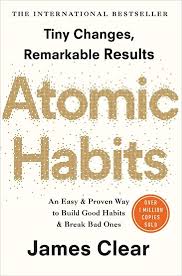 Atomic Habits, by James Clear
An utterly useful guide for ditching bad habits and obtaining desired ones. It doesn’t strictly focus on social media use.
Filed under: Opinion
Originally published: June 10, 2026